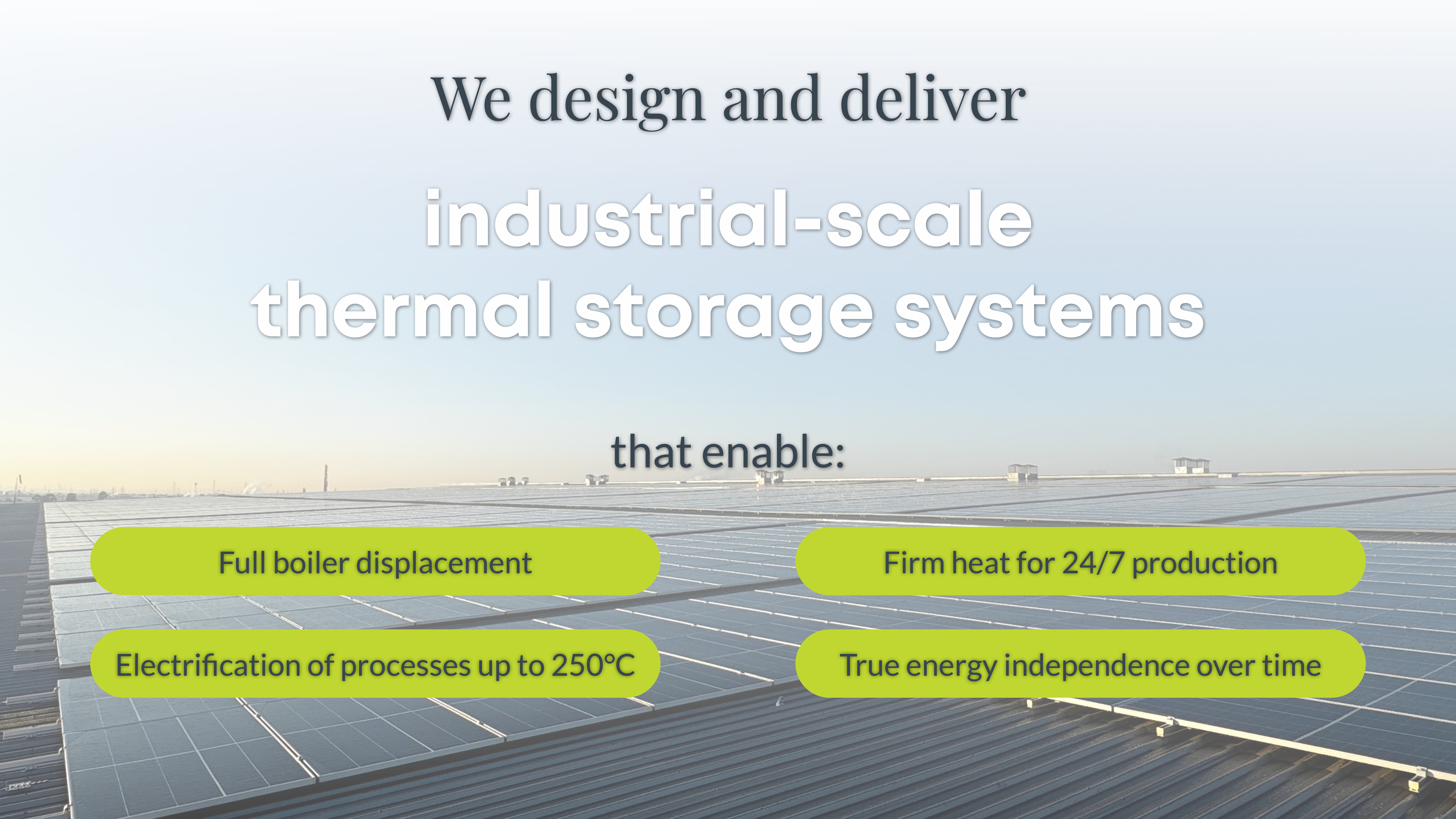
Thermal Energy Storage (TES)
Industrial-Scale Energy Storage for Heat & Cooling
-50°C to 250°C | 20–30+ Year Life | 95% Round Trip | No DNSP Approvals
Electrifying heat is simple.
Running it reliably and cost-effectively is not — unless you store energy.
Thermal Energy Storage (TES) enables factories to shift heat and cooling loads away from peak demand, stabilise heat pump operation, capture waste heat, and run through grid disturbances without production loss.
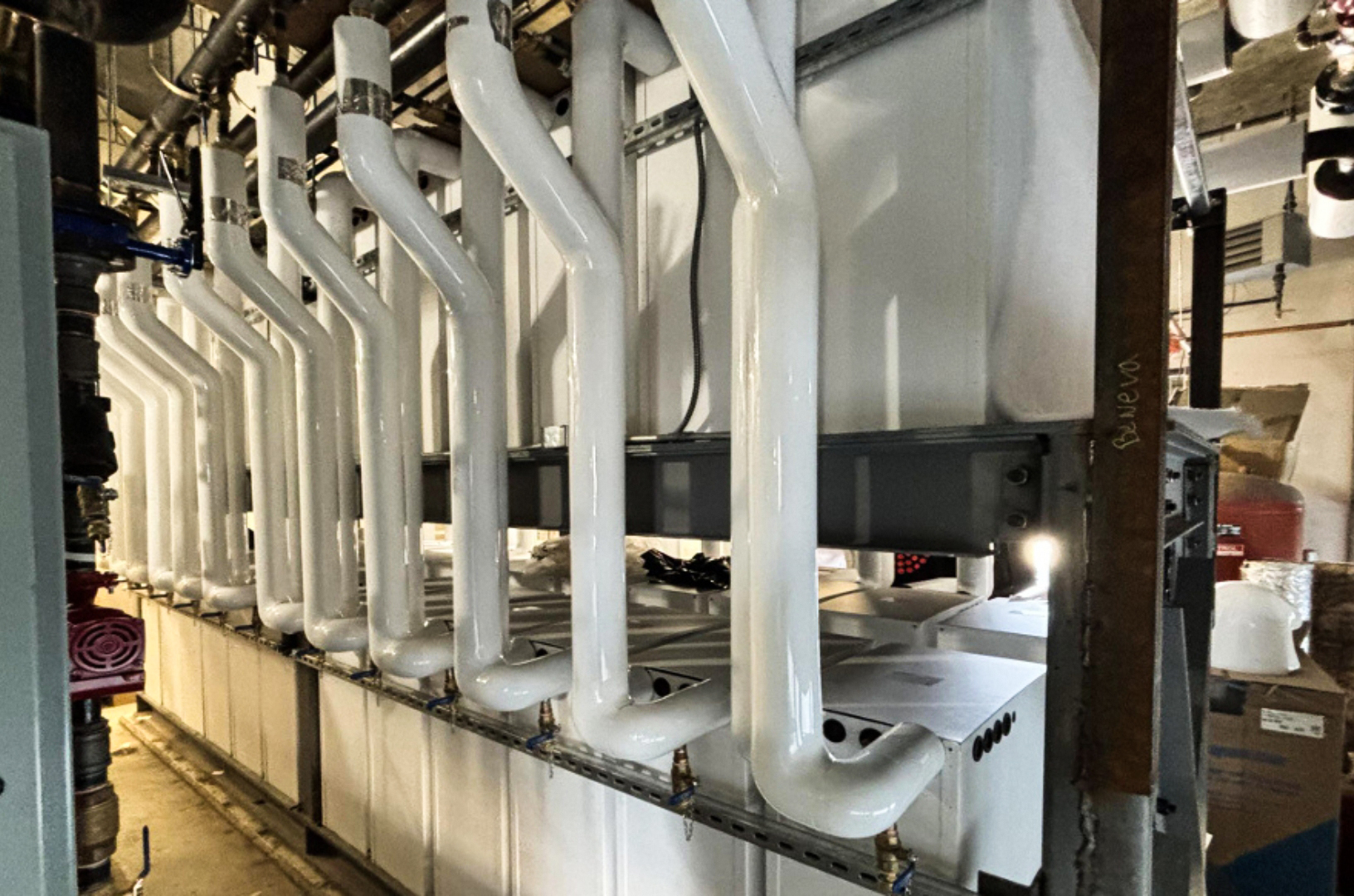
We deploy high-density Phase Change Material (PCM) storage, engineered for industrial thermal duty. TES integrates into process loops like any mechanical asset — it does not behave like a battery system.
No export limit.
No DNSP negotiation.
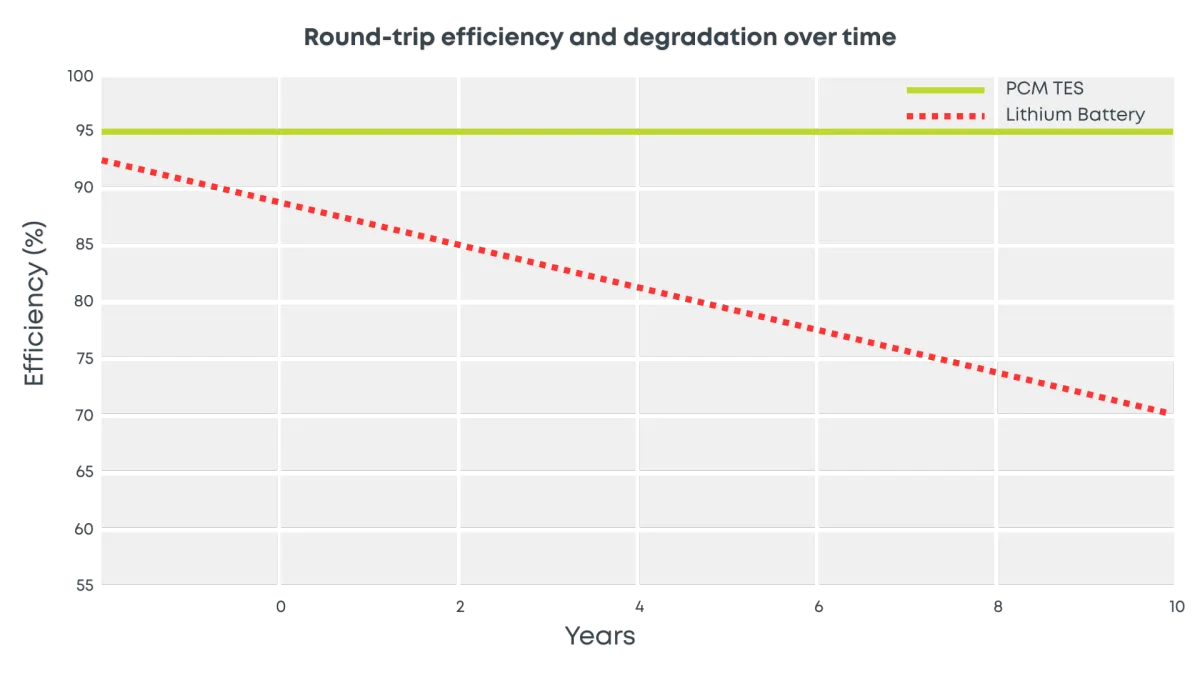
No degradation curve.
TES is infrastructure-level storage for heat & cooling.
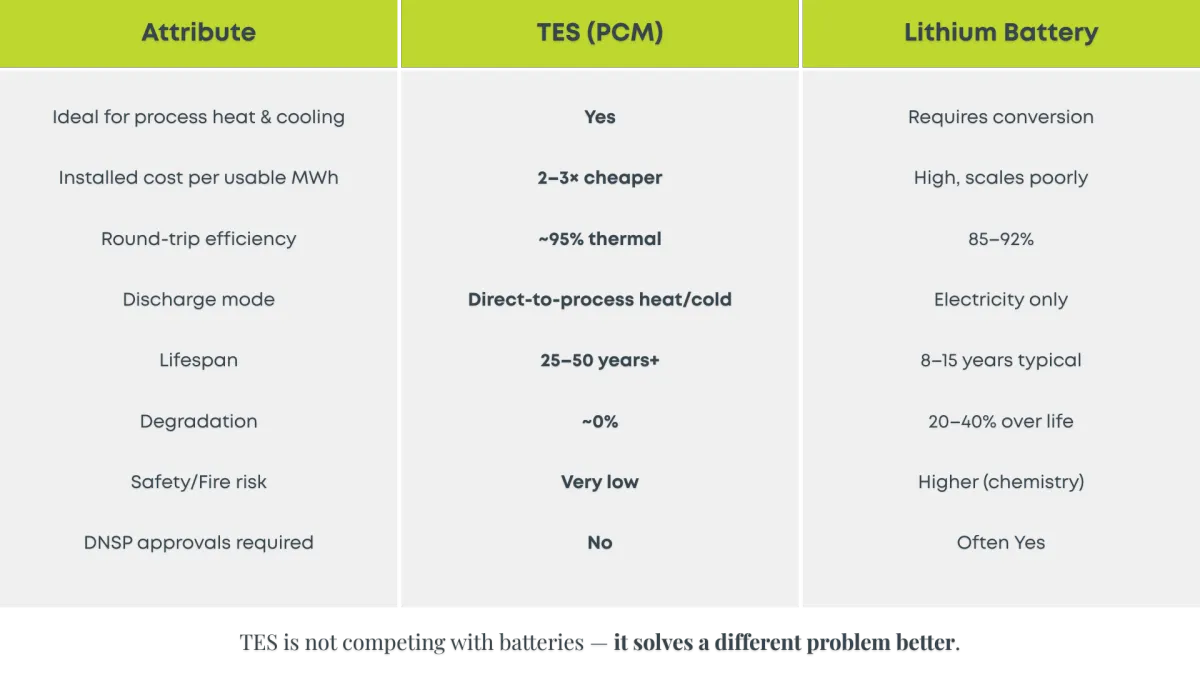
Why TES Instead of Batteries?
How Phase Change Storage Works
Water freezing at 0°C stores more energy than heating water from 0°C to 80°C.
Why? Latent heat of fusion.
We apply the same physics using engineered PCM salts and composites.
When energy is added, the PCM changes phase and absorbs large amounts of heat with minimal temperature rise. When energy is needed, the material solidifies and releases that stored energy on demand, instantly.
Operating ranges:
-50°C → 250°C industrial envelope
Storage density:
Up to 4–10× higher than sensible hot water tanks
Response time:
Immediate heat/cold dispatch
Footprint & Format
Modular blocks or tank banks
Hot or cold storage options
Can be containerised for rapid install
Typical 1 MWh thermal ≈ 2–10 m³ footprint depending on temperature range
Example:
20 MWh TES = ~1 × 40ft container equivalent
Where TES Fits
High-value use cases where boilers & chillers cycle heavily:
Meat & protein processing
Dairy, cheese, yoghurt
Breweries & wineries
Refrigeration/cold stores
Rendering/tallow
CIP & sanitation
If heat pumps alone electrify a site, TES allows us to electrify it reliably.
What TES Enables
Run heat pumps continuously at maximum SCOP
Entirely remove peak boiler operation
Shift load from peak to off-peak electricity
Firm industrial heat & cooling 24/7
Boiler-free operation when integrated with MVR
Peak load clipping without electrical batteries
Ride through grid disturbances (resilience)
TES turns renewable electricity into firm industrial heat.
Performance & Integration
Round-trip thermal efficiency: ~95%
Discharge depth: 100% usable
Operating life: 25–50+ years
Charge via: heat pump, WHR, MVR, surplus refrigeration
Discharge to: hot water, process heat, chilled glycol, brine
We exclusively use phase change storage — not water tanks — because density matters in factories.
Storage Economics
Installed and commissioned, TES typically delivers:
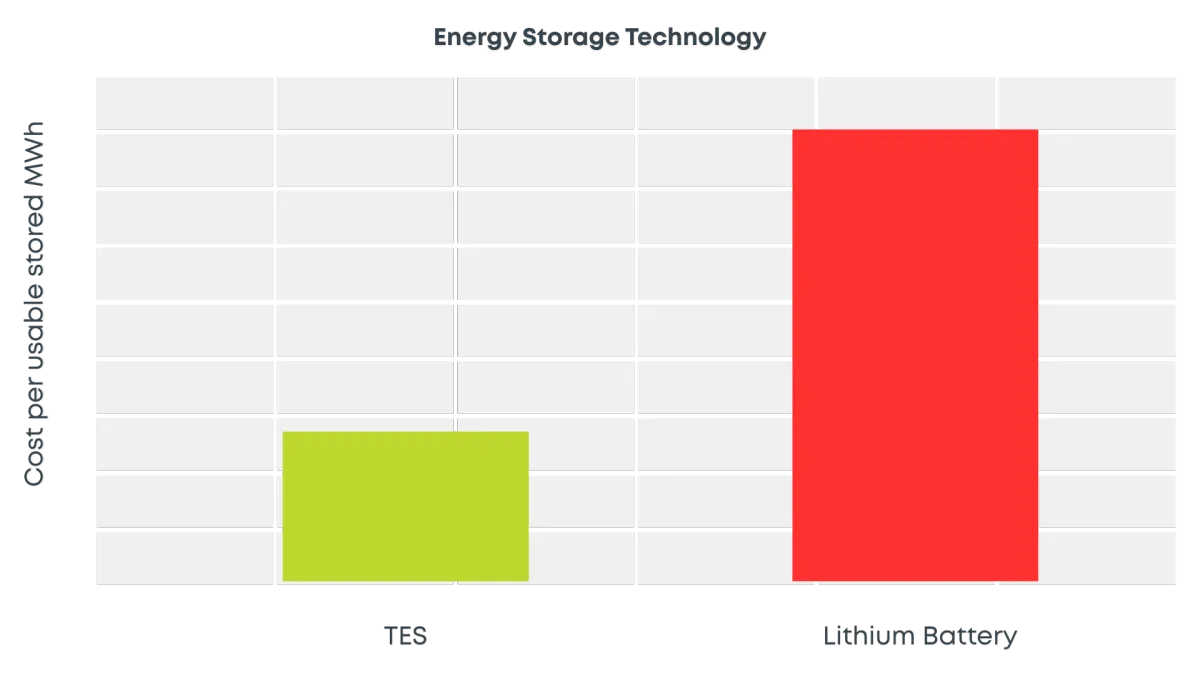
2–3× lower $/MWh delivered heat than lithium batteries
…and outlives them by a factor of 2–3.
Efficiency & Lifecycle
Unlike batteries, thermal storage does not degrade over time.
Resilience & Reliability
No fire risk like Li-ion systems
No complex grid approvals
Mechanical infrastructure, not electronics
Designed for 24/7 industrial cycling
Minimal maintenance
Works N+1 with heat pumps
TES removes the last argument for keeping gas.
Why We Deploy TES
Because high efficiency heat pumps are most powerful when backed by storage.
Base-load operation increases lifespan, reduces compressor cycling,
and increases system SCOP dramatically.
TES + Heat Pump + MVR =
Boiler replacement with permanent decarbonisation.