Industrial Thermal Energy Storage: The Definitive Guide to Decarbonising Process Heat in Australia
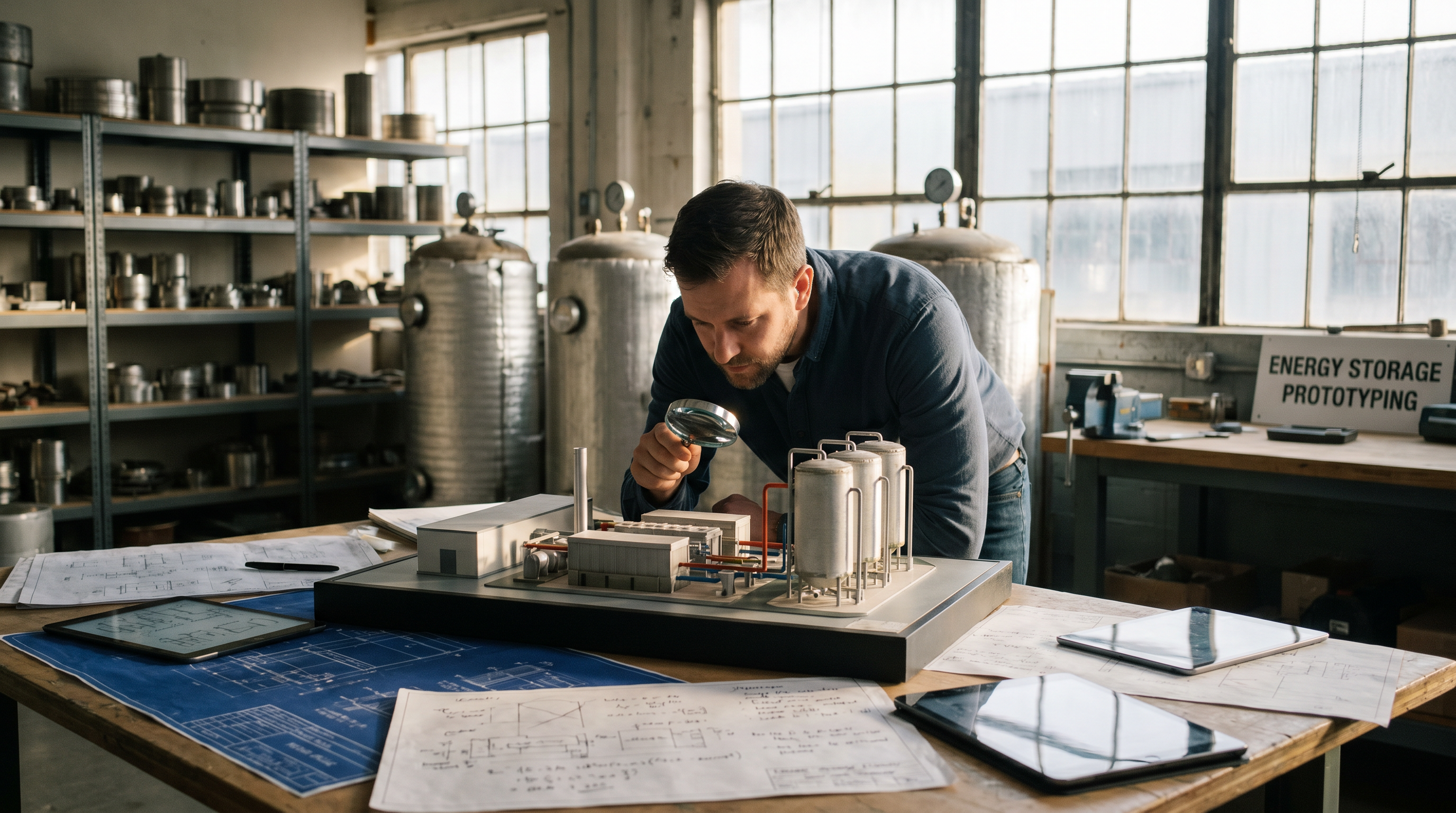
Industrial Thermal Energy Storage: The Definitive Guide to Decarbonising Process Heat in Australia
Discover how industrial thermal energy storage technologies can decarbonise process heat in Australia. Learn about sensible, latent, and thermochemical solutions.
Thermal Energy Storage for Australian Industry: A Practical Guide for Process Heat, Solar, BESS and EaaS
Summary:Thermal energy storage (TES) can substantially reduce gas usage in industrial settings by shifting heat production to periods of lower-cost electricity, thereby enhancing the economic feasibility of heat electrification. For sectors like manufacturing, poultry operations, hotels, and commercial facilities, the most compelling business case arises when TES is integrated with Industrial Heat Pumps, Commercial Solar, Battery Energy Storage Systems (BESS), and controls into a cohesive system.
Table of Contents
The Strategic Role of Thermal Storage in Australian Industry
Core Terminology: Understanding Thermal Energy Storage (TES)
The Strategic Role of Thermal Storage in Australian Industry
The primary challenge for Australian manufacturers isn't merely producing cheaper electricity; it's transforming that electricity into dependable process heat without interrupting production. Thermal energy storage is emerging as a key solution, linking affordable renewable electricity with the continuous, high-temperature heat industrial operations demand.
Industrial process heat constitutes approximately 42% of Australia's total industrial energy consumption, predominantly fuelled by natural gas (53%) and coal (21%), according toAustralian Energy Statistics. This dependency makes manufacturers vulnerable to fluctuating fuel prices and carbon cost risks.
"Decarbonising industrial process heat is critical to Australia's net zero transition, but it remains one of the hardest problems to solve."— Darren Miller, CEO, ARENA
Decarbonising electricity grids with solar and wind does not automatically resolve process heat demands, as many industrial processes require sustained temperatures ranging from 150°C to 1,000°C. Thermal energy storage provides a viable Business Case for electrification by storing surplus renewable electricity as heat for later use, ensuring continuous process operation without gas, and delivering Demand Reduction, Operational Savings, and decreased fossil fuel reliance.
For businesses evaluatingindustrial energy system integration, grasping the fundamentals of thermal energy storage is the first step. The next section defines key terminology for assessing thermal energy storage solutions.
Core Terminology: Understanding Thermal Energy Storage (TES)
Thermal energy storage captures surplus energy and releases it as needed, but the mechanisms differ across technologies.
Understanding four foundational concepts is essential before evaluating any system. These concepts represent distinct methods for storing and recovering thermal energy, each with specific industrial trade-offs.
Sensible Heat Storage
Energy is stored by increasing the temperature of a solid or liquid medium, such as water, sand, or refractory bricks, and is recovered as the medium cools.
Latent Heat Storage
Phase-change materials (PCMs) absorb or release energy during a phase change, storing significant energy at a constant temperature.
Thermochemical Storage
Reversible chemical reactions store and release energy at high density, offering long-duration, lossless storage.
Round-Trip Efficiency
The ratio of usable energy recovered from a storage system to the energy initially stored, crucial for Business Case assessment.
Geckon Insight: Most industrial sites do not need 24-hour heat generation. They need 24-hour heat availability. Thermal storage separates those two problems.
Round-trip efficiency is crucial for system economics.Well-designed thermal energy storage systems can achieve efficiencies near 95%, making them competitive with battery alternatives for Process Heat applications.
Sensible heat storage prevails in industrial deployments due to its low cost and simplicity. Latent and thermochemical approaches are gaining interest, with theRenewable Thermal Alliancenoting increased commercial interest. Selecting the right mechanism for your load profile is crucial for a feasibility assessment.
Industrial Thermal Storage Technologies Explained
Choosing the right thermal energy storage technology depends on operating temperature, load profile, and capital budget, with significant impacts on a project's commercial viability.
Theglobal industrial thermal energy storage market is projected to reach US$4.5 billion by 2034, highlighting rapid adoption across heavy industry. Three core technologies dominate Australian manufacturing applications.
Sensible Heat Storage
Sensible heat storage captures energy by raising the temperature of a solid or liquid medium. It's the most mature and cost-effective entry point for most manufacturers.
Common materials:
Refractory bricks (fired ceramic, magnesia)
Concrete and engineered aggregates
Water and thermal oil
Molten salt blends
Thermal Batteriesusing refractory bricks or dense concrete are becoming popular due to reduced system costs, as noted in projects supported byARENA.Molten Salt Systemsare proven in solar thermal plants and suit industrial process heat applications requiring temperatures between 290°C and 565°C.Steam Accumulatorsmanage demand spikes without a complete system overhaul.
Latent Heat Storage
Latent storage captures energy through phase change, delivering higher energy density than sensible systems at the same volume.
Common materials:
Paraffin waxes and fatty acids (low-temperature)
Salt hydrates
Eutectic metal alloys (high-temperature)
Thermochemical Storage
Thermochemical systems store energy in reversible chemical reactions, offering the highest theoretical energy density. Though less mature, they are advancing through Australian research.
Common materials:
Metal hydroxides (e.g., calcium hydroxide)
Ammonia-based systems
Zeolite and silica gel (lower temperature)
Sensible heat systems, particularly concrete and refractory brick designs, offer the strongest Payback Period for most applications. However, the choice of storage medium is only one aspect of the decision.
The Future of Thermal vs. Compressed-Air Storage
Thermal heat storage is more efficient for process heat than compressed-air alternatives, as it avoids energy conversion losses. When a facility needs 200°C for a drying process, storing heat directly is more efficient than converting electricity to compressed air and back.
Compressed Air Energy Storage (CAES) pressurises air in caverns or tanks, releasing it through turbines to generate electricity. This electricity must then drive heating equipment before reaching your process, each conversion step incurring losses—typically 40–60% round-trip efficiency for CAES. Thermal storage bypasses this, delivering usable heat at 70–85% efficiency for most applications. For Process Heat needs, storing what you consume is more efficient.
Material longevity strengthens thermal storage's commercial case.Unlike lithium-ion batteries that degrade with each cycle, thermal batteries built from refractory bricks or engineered concrete composites are designed for decades of operation with minimal performance loss. AsForbesnotes, thermal storage relies on stable materials rather than reactive cells, altering the Payback Period calculation—30-year assets with low maintenance costs differ significantly from batteries requiring mid-life replacement.
Solid-state thermal storage also has a favorable safety profile: no fire risk from thermal runaway, no hazardous chemistry, and no pressure vessel management. Scalability follows the same logic: adding thermal capacity means adding more storage medium—brick, concrete, or phase-change material—rather than managing battery strings and systems.
These characteristics—efficiency, longevity, safety, and scalability—make thermal storage a durable infrastructure investment. The question for most facilities isn't whether thermal energy storage is viable, but how it integrates with upstream heat generation equipment—a question Industrial Heat Pumps are well-suited to answer.
Integrating TES with Industrial Heat Pumps
Combining an Industrial Heat Pump with thermal storage eliminates gas boiler dependency without compromising process reliability—it's the most commercially viable path to Heat Electrification today.
With natural gas providing 53% of Australia's industrial heat energy, the business case for replacing it hinges on delivering electrified heat at the right time, temperature, and cost. Standalone heat pumps often can't meet all three conditions simultaneously. Paired with thermal storage, they can.
System-Level Integrationensures heat generation, storage, and delivery operate under unified controls—not as separate assets. Without integrated controls, a heat pump and storage vessel are just expensive equipment sharing a plant room. With them, the system optimises charge and discharge cycles against real-time electricity pricing, process demand schedules, and grid signals automatically.
The commercially viable workflow involves three steps:
Charge during off-peak periods.The Industrial Heat Pump operates when electricity is cheapest—typically overnight or during high renewable generation—transferring thermal energy into storage. This decouples heat generation cost from consumption timing.
Decouple heat generation from demand.Thermal storage buffers the mismatch between cost-effective heat production and Process Heat demand, managing production shifts, peak charges, and variable pricing at the system level.
Discharge on demand.Stored heat meets scheduled process loads with consistent temperature and flow, regardless of grid conditions or pricing.
Geckon Insight: Thermal storage only works commercially when heat pumps, solar, batteries, and controls are engineered as one system.
Facilities treating heat pumps and storage as a single system achieve shorter Payback Periods and predictable Operational Savings. Integrated controls are essential for commercial value.
Benchmarking capital cost against realistic Operational Savings is crucial, which the next section addresses through Levelised Cost of Heat analysis and funding pathways.
Benchmarking Costs and ROI for Industrial Facilities
Evaluating thermal storage technologies on cost alone misses the broader picture—real business value lies in gas displacement, demand reduction, and avoided network charges over a 15–20 year asset life.
Understanding where your money goes—and returns—requires separating capital from operational exposure. Facilities framing thermal storage as a CAPEX decision often underestimate the compounding value of lower heat costs against volatile tariffs.
Four financial drivers define ROI:
Gas displacement savings:Replacing gas-fired heat with off-peak electricity or renewables reduces fuel costs and carbon liability.
Demand Reduction value:Shifting thermal loads from peak periods cuts demand charges, a significant share of energy bills in Australia.
Energy market volatility protection:Thermal storage hedges against price spikes by pre-charging during low-cost periods—a material advantage in Australia's market.
Avoided infrastructure costs:Onsite heat storage can defer or eliminate gas network upgrades, pipe replacements, or boiler updates.
TheLevelised Cost of Heat (LCOH)is the most reliable metric for comparing storage-backed heat supply against conventional gas. According toIDTechEx, industrial heating represents 30% of global energy consumption, driving commercialisation and falling material costs that improve LCOH.
On funding, bothARENAand CEFC offer concessional finance and grants for industrial decarbonisation projects. ARENA has committed A$3.25 million to thermal storage feasibility studies in Australia, indicating strong policy support for credible Business Cases.
Payback periods for well-structured thermal storage projects typically range from 5 to 10 years, compressing with ARENA co-funding or CEFC debt alongside Operational Savings from Demand Reduction.
Facility type
Strongest opportunity
Typical project focus
Food manufacturing
Gas reduction
Heat pump + TES
Poultry
LPG reduction
Air-to-water heat + buffer storage
Hotels
Hot water cost reduction
Heat pump hot water + storage
Shopping centres
Demand reduction
BESS + thermal load shifting
The financial profile varies by sector. The next section examines how sector-specific load patterns shape storage design and commercial outcomes.
Applications: From Food Processing to Heavy Manufacturing
Thermal energy storage (TES) delivers its strongest business case in industries with predictable, high-volume heat demand, and Australia has several such industries.
The principles of TES paired with Industrial Heat Pumps and ROI have been established. The question now is how these principles translate into specific operational contexts. Each industry presents a distinct heat profile, and the chosen thermal solution is based on commercial fit, not technology preference.
Food & Beverage
Problem:Pasteurisation and cleaning-in-place (CIP) cycles create heat demand spikes that strain boiler capacity and increase gas consumption.
Thermal Solution:Hot water or steam thermal storage pre-charges during off-peak periods, supplying process temperatures on demand without oversizing boiler plant. This reduces Demand Reduction exposure and smooths energy spending.
Chemical Processing
Problem:Exothermic and endothermic reactions require sustained, precise temperature bands. Supply interruptions risk product loss or safety issues.
Thermal Solution:Phase change materials (PCMs) or pressurised hot water tanks buffer temperature fluctuations, maintaining reaction conditions while reducing peak boiler draw. Solid-state sensible heat storage, effective across temperatures from 100°C to over 1,000°C, is increasingly specified for high-temperature chemical processes.
Commercial Facilities
Problem:Large buildings face peak HVAC loads that drive demand charges and strain central plant during summer peaks.
Thermal Solution:Chilled water or ice-based Thermal Storage shifts cooling load to overnight hours, cutting peak demand charges and extending equipment life.
Mining and Minerals
Problem:High-temperature drying and calcination processes in alumina refining and lithium processing run continuously at temperatures dominated by fossil fuels.
Thermal Solution:Solid-state thermal batteries, under development with Australian government support, can store renewable electricity as heat at required temperatures, offering a credible path to electrified Process Heat without sacrificing throughput.
Geckon Insight: If a site’s gas bill is larger than its electricity bill, solar alone is unlikely to be the highest-value energy project.
Technology selection is straightforward once process temperature, load profile, and available footprint are defined. Integration, however, is less straightforward, which is the focus of the next section.
Overcoming Integration Challenges
Deploying thermal energy storage for industrial process heat isn't plug-and-play—practical hurdles like space, controls, and system compatibility determine project success.
Each challenge has proven mitigations. Understanding them upfront shapes a realistic Business Case and avoids costly redesigns mid-project.
Challenge 1: Space Constraints
Large molten salt tanks or pressurised hot water vessels require significant space—often 200–500 m² for mid-scale installations. Facilities with constraints address this through vertical tank configurations, modular solid-state thermal batteries (offering denser footprints due to minimal moving parts), or relocating yard assets to free space. A site feasibility assessment early in design prevents space from becoming a project killer.
Challenge 2: Control Logic and Production Scheduling
Syncing storage discharge with variable production schedules is a significant challenge. Thermal systems must respond dynamically to shift changes, batch cycles, and unplanned downtime—not just a fixed daily load curve. A supervisory control layer integrates with existing SCADA or management systems, applying rule-based dispatch logic tied to production triggers rather than time-of-day defaults.
Challenge 3: Retrofitting into Existing Thermal Loops
Integrating with live steam or thermal oil loops involves pressure compatibility, exchanger sizing, and fluid chemistry considerations. Greenfield projects avoid most issues, but retrofits require detailed P&ID reviews and often a buffer exchanger to isolate the storage circuit. A well-engineered retrofit preserves existing equipment, improving Payback Period.
Reliability and Redundancy
Thermal storage must not become a single point of failure for Process Heat supply. Standard mitigation includes bypass valving so production can draw from the primary heat source if storage is offline, ensuring uptime isn't compromised during commissioning or servicing.
Integration challenges increase when combined with onsite solar or a Battery Energy Storage System, introducing additional dispatch complexity, explored in the next section.
The Role of Solar EPC and BESS in Thermal Systems
Thermal storage's strongest business case emerges when solar generation, battery storage, and process heat demand are treated as a single system.
Excess Commercial Solar output is often underutilized on industrial sites. During midday peaks, surplus electricity typically exports at low rates or is curtailed. Redirecting that surplus to charge a thermal reservoir converts wasted generation into usable Process Heat, effectively storing sunlight as industrial-grade temperature. The Operational Savings accumulate quickly: sites reduce both gas consumption and grid electricity purchases.
BESS and TES serve different but complementary roles, and conflating them is a common mistake. A Battery Energy Storage System excels at power quality, short-duration response, and managing load fluctuations. Thermal Storage handles sustained, high-volume heat demand more cost-effectively than chemical batteries. Deploying both ensures power reliability and process continuity through the appropriate technology—not a compromise.
Integrated systems treat heat, power, and storage as a single engineered system to deliver practical decarbonisation."— Geckon
Strategic thermal discharge also reducespeak demand charges—often a significant line item on an industrial electricity bill. Pre-charging the thermal reservoir during off-peak or high-solar periods, then discharging during peaks, flattens the load profile without interrupting production.
The Energy-as-a-Service (EaaS) model aligns well with integrated systems. Rather than funding separate projects for solar, BESS, and TES, operators can access the full system under a single service agreement—paying from verified Operational Savings. This removes CAPEX barriers and aligns provider incentives with performance outcomes.
The commercial fundamentals and conclusions from this integrated approach are consolidated in the next section.
Key Takeaways: The Bottom Line for Facility Managers
Thermal storage offers facility managers a proven path to Demand Reduction, lower gas exposure, and long-term Operational Savings—without waiting for battery chemistry to advance.
The case for industrial Thermal Storage is based on four practical conclusions from this guide:
Efficiency is unmatched.Thermal storage systems achieve high round-trip efficiency, making them the most cost-effective technology for Heat Electrification
Decouple to Save:Thermal storageallows you to generate heat when it's cheapest, not just when you need it
Risk Mitigation:Reducing gas dependency protects yourBusiness Caseagainst volatile fossil fuel markets.
EaaS Availability:You don't always need upfront CAPEX;Energy-as-a-Servicecan fund the transition through guaranteed savings.
Implementing Your Thermal Strategy: Next Steps
Energy Audit:Profile your current gas usage and steam/hot water temperatures.
Feasibility Study:Model thePayback Periodof integratingthermal energy storage teswith your current equipment.
System Integration Design:Determine howthermal storage energywill interface with your existing boilers or newIndustrial Heat Pumps.
Commercial Structuring:Compare a traditional CAPEX investment against anEnergy-as-a-Servicemodel to determine the best fit for your balance sheet.

