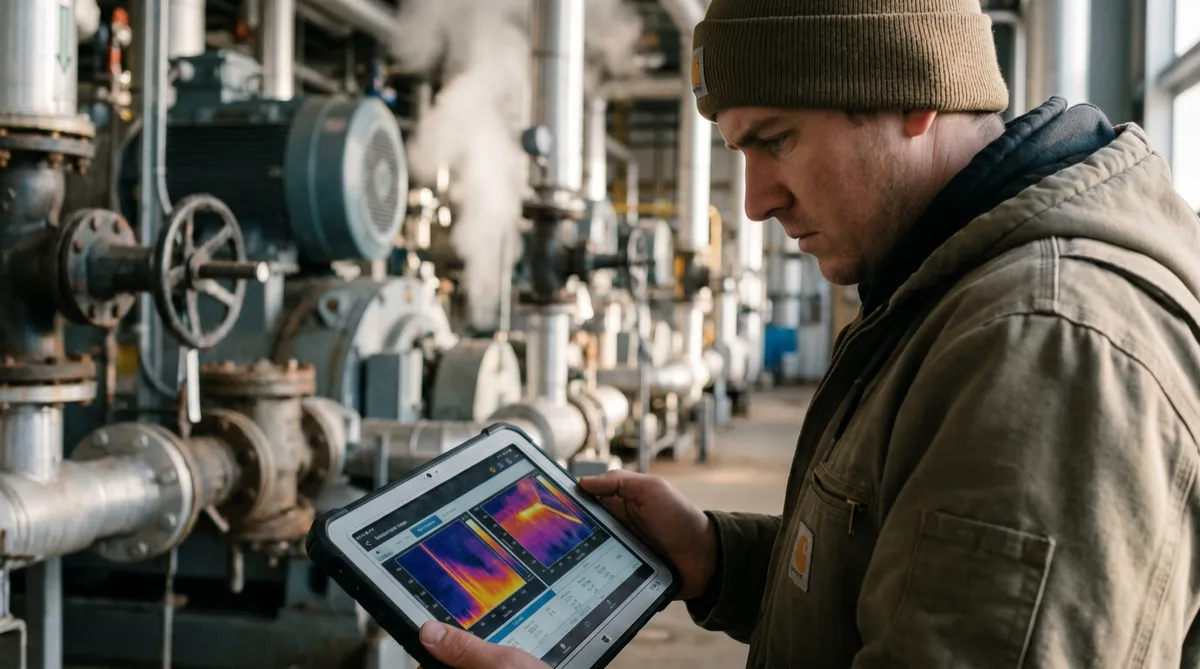
How to Integrate High-Temperature Heat Pumps into Industrial Steam Systems
Step 1: Audit Thermal Loads and Identify Sub-95°C Demands
Integrating industrial heat pumps for steam generation starts with understanding exactly where your steam is going — and whether all of it actually needs to be steam. Many facilities default to steam for every thermal task, even where lower-temperature hot water would work equally well at a fraction of the cost. A structured thermal load audit separates the high-grade demands that need steam from the lower-grade demands that a high-temperature heat pump can supply directly, according to the ACEEE.
The goal: quantify every thermal load by temperature requirement, then isolate the sub-95°C demands where direct heat pump supply is both technically viable and commercially justified.
Map all process heat requirements across the facility, recording supply temperature, flow rate, operating hours, and annual energy consumption for each end use.
Identify low-grade heat demands— sanitation circuits, Clean-in-Place (CIP) systems, space heating, and hot water services — which typically operate well below the 95°C threshold.
Isolate consistent sub-95°C loads that run predictably during production hours, as stable demand profiles strengthen the Business Case for dedicated heat pump supply.
Quantify total steam energy currently serving these lower-temperature tasks, expressed in GJ or MWh annually, to establish the baseline for Operational Savings calculations.
This segmentation exercise is the foundation for every decision that follows — including heat pump sizing, integration configuration, and Payback Period modelling. Once you've isolated the right loads, the next step is configuring the heat pump to supply them directly.
Step 2: Configure the Heat Pump for Direct Process Supply
Once you've mapped your sub-95°C thermal loads, the next step is configuring industrial steam heat pump technology to supply those loads directly — bypassing the steam loop entirely where possible. This approach maximizes your Coefficient of Performance (COP)and delivers the strongest Payback Period on capital invested.
Industrial heat pumps can reduce energy consumption by 3–8x compared to traditional gas boilers by moving heat rather than generating it from combustion. Capturing that efficiency advantage requires careful configuration from the outset.
Follow this sequence to commission the heat pump correctly:
Select a high-temperature heat pump (HTHP)rated for 95°C+ delivery to match your identified process loads without short falling on output temperature.
Install a dedicated heat exchanger loop that diverts hot water supply directly to the target loads, keeping it isolated from the main steam distribution line.
Integrate local controls that instruct the HTHP to prioritize direct loads during production peaks, preventing unnecessary steam draw.
Monitor COP continuously using sub-metering on both electrical input and thermal output — flag any reading outside the 3–8x efficiency range for investigation.
Getting the controls integration right is often where Operational Savings are won or lost. An HTHP running outside its optimal load range will drift below target COP, eroding your Business Case over time.
With direct supply configured, the next opportunity is recovering residual heat from the HTHP discharge to preheat boiler feedwater — reducing gas firing rates and cutting fuel costs further.
Step 3: Integrate Heat Pump Discharge for Boiler Feedwater Preheating
With your MVR steam heat pump industrial configuration supplying direct process heat, residual thermal capacity can do a second job — cutting the boiler's fuel demand before it fires a single burner. Diverting HTHP discharge heat into the boiler feedwater tank is one of the highest-return integration steps available, and it requires relatively straightforward pipework changes paired with burner control adjustments.
According to ResearchGate, integrating heat pumps for boiler feedwater preheating can reduce CO₂ emissions by up to 17.8 kg per ton of steam produced— a meaningful operational saving at scale.
Follow this sequence to implement feedwater preheating effectively:
Divert residual HTHP discharge heat to a dedicated feedwater preheat circuit, sized to handle peak thermal output without throttling the primary process supply.
Target a preheat temperature of 75°C–95°C at the boiler feedwater tank inlet — this range captures maximum heat pump benefit while staying within standard tank material tolerances.
Adjust boiler burner controls to reflect the higher inlet temperature, reducing fuel firing rates proportionally and avoiding overfiring during low-demand periods.
Calculate the reduction in gas consumption per ton of steam produced using your pre-integration baseline data from Step 1, establishing a clear before-and-after payback metric.
In practice, every degree of preheat reduces the energy the boiler must add, compressing the Payback Period on the overall system investment. Getting burner controls calibrated correctly is critical — without this adjustment, efficiency gains are partially lost to overfiring. That's where orchestrating the full system becomes essential, which Step 4 addresses through advanced controls.
Step 4: Orchestrate the System with Advanced Controls
With direct process supply and feedwater preheating both configured, the critical question shifts from equipment selection to system coordination. Electrifying industrial steam with heat pumps only delivers its full Operational Savings potential when every component responds intelligently to the others. Equipment alone doesn't guarantee performance — orchestration does.
"Anyone can buy equipment. Only orchestration delivers performance." — Geckon Energy
Follow this sequence to build a control architecture that protects efficiency gains across fluctuating production conditions:
Deploy a central control platform that connects the industrial heat pump, boiler, and Thermal Storage under a single supervisory layer. This unified view prevents the components from working against each other during demand shifts.
Program anti-short-cycling logic to prevent the heat pump from repeatedly starting and stopping during variable production schedules. Short-cycling degrades compressor life and undermines the Business Case.
Integrate BESS or Commercial Solar generation data so the control platform schedules heat pump operation during peak renewable output windows, reducing grid import costs.
Restrict the boiler to a temperature-boost role, activating only when high-pressure steam requirements exceed the heat pump's delivery ceiling. This preserves the boiler as a precision tool rather than a default workhorse.
These four control decisions determine whether the system achieves its projected Payback Period or underperforms against it. The next section pulls together the commercial implications of getting this right.
How to Evaluate the Bottom Line: Key Takeaways
Integrating industrial heat pump energy efficiency steam strategies into an existing facility doesn't require tearing out proven infrastructure. The four-step approach outlined in this guide demonstrates a practical path to meaningful Energy Reduction while protecting operational continuity.
Apply these takeaways before advancing to a formal Business Case:
Hybridize first. Pairing an Industrial Heat Pump with your existing boiler allows immediate gas consumption cuts without a full system replacement — reducing risk while validating performance on your site.
Prioritize direct sub-95°C loads. Matching heat pump output to process temperatures below 95°C maximizes coefficient of performance and delivers the strongest Operational Savings per unit of electricity consumed, as confirmed by EECA's industrial heat pump guidance.
Use feedwater preheating as a secondary sink. Any surplus thermal capacity finds a productive, high-efficiency outlet in boiler feedwater preheating — improving overall system economics without additional equipment complexity.
Treat controls as the investment multiplier. Advanced orchestration converts individually efficient components into a coordinated system, which is where long-term Demand Reduction compounds over time.
If upfront capital is a constraint, Energy-as-a-Service (EaaS)models can fund the full integration — equipment, controls, and commissioning — against realized savings rather than capital budget.
Assess your site's heat profile with Geckon Energy to identify where these steps deliver the fastest Payback Period for your specific process requirements.

